The History of Online School, Benefits, and Options
COVID-19 changed the way families do everything, from work to play to school. However, as life returned to normal, many pandemic-era practices remained in place.
One of those practices was online school. Virtual education was nothing new when lockdown orders started. But post-pandemic, it’s become clear that online learning is here to stay.
If you’re still working hard to navigate the online learning landscape, this post can help you sort it all out. You can read about the history, and online school options and decide which is best for you.
History of Online School
Long before the internet became common in U.S. households, distance learning existed. In the late 1800s, students attended something called correspondence school, where lessons and coursework were exchanged via the U.S. Postal Service. After World War II, these schools became especially popular with military servicemen using their G.I. Bill benefits to get a convenient college education.
But for online schooling to kick-off, students had to wait around for the internet to be invented. The first online school was The University of Phoenix, which launched its online program way back in 1989. Secondary education joined the online education wave in 1994 when a private school called CompuHigh went online. Also known as Whitmore High School, CompuHigh is recognized as the world’s first online high school.
Educational Options
For decades, students have gone to a brick and mortar building for their education, attending classes nine months a year from the age of five to 18, at least. As great as traditional education can be for socialization, there are some downsides including needing transportation.
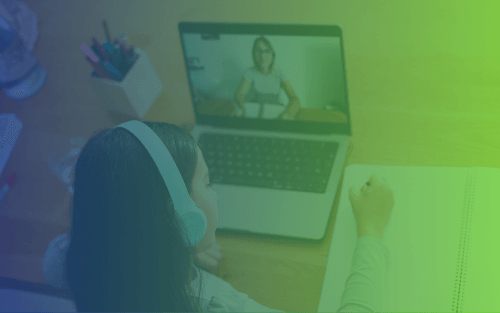
The internet has opened up alternatives to this traditional learning model. From the comfort of their homes, students can take online courses. This can be combined with traditional school for a hybrid model or done exclusively.
Another option, homeschooling, has parents taking more of a hands-on approach to their child’s learning. Instead of online teachers handling instruction, parents issue lessons and grade schoolwork, ensuring that education meets state standards.
Benefits of Online School
Online school has some clear benefits compared to both homeschooling and traditional learning. Here are a few:
- Flexible Scheduling and Convenience: Students can take courses from anywhere with an internet connection, and often they can complete coursework at a time that works for them.
- Custom Curriculum and Programming: Many online schools like BlueSky can customize learning to individual students’ needs.
- Safe Learning Environment: Classes are free of distractions and social issues kids often face. But there are also often social options for students who want that in-person interaction.
- Personalized Approach: Online schools can customize a curriculum to meet student’s unique learning needs with more readily available one-on-one attention.
- Parental / Family Involvement: Students learn at home, often with parents nearby. Many online educators also have a setup that encourages parental involvement.
Synchronous vs. Asynchronous Learning Options
Online learning flexibility can vary, so it’s important to choose a program that fits your needs. For the most flexible option, you’ll want to look for asynchronous learning options, which have lessons prepared in advance so students can tackle their education when they have time. Synchronous learning is a more real-time option, with students logging into a videoconference at a set time.
One downside to asynchronous learning is that it requires more discipline. Some students find that the synchronous option holds them accountable and keeps them from going off track.
Online School Tech Requirements
The first thing you’ll need to be able to attend online school is a solid internet connection. You can run a speed test to ensure you’ll have the connection necessary to stream video and download documents. Make sure your download and upload speeds meet these minimums:
Download: 3 Mbps recommended (ideally 5 Mbps or more)
Upload: 1.5 Mbps recommended (ideally 3 Mbps or more)
Also, look at the hardware requirements for accessing your school’s portal. Some schools require Macs, while others require PCs, and still, others are fine with either. As handy as tablets and Chromebooks can be, they might not suffice for online learning.
What Kind of Online Courses can I Expect?
Before choosing an online school, take a close look at its credentials. Colleges should be accredited by U.S. Department of Education-recognized organizations. Any elementary, middle, or high school needs to follow state standards to ensure you satisfy all requirements for receiving a diploma upon completion.
As with traditional school, you’ll choose courses from a catalog. You’ll probably be limited to the classes you need to graduate. Still, there is some wiggle room to take some courses that fit your interests, like photography, criminal justice, or music appreciation.
If you’ve chosen a synchronous learning option, you will have to balance course times as you plan your schedule. If you’re taking algebra on Mondays at 10 a.m., you won’t be able to take English or social studies at the same time.
What Kind of Support Can I Expect?
When students need help, it’s essential to know that they can get it. This means a visit to the school guidance counselor or an after-class conversation with a teacher in traditional schooling. Parents may also meet directly with teachers.
This same principle can apply to online learning. But instead of making an appointment and traveling to a school, you can have a videoconference. Students can also interact one-on-one with teachers and assigned counselors whenever they need support. Since it all happens online, this help is accessible at your own convenience.
How Much Does Online School Cost?
Before you start comparing prices, gather a list of free online education options. Some states offer free public school online for students working toward a high school education. You can also take free online courses if you’re pursuing a college degree.
Most free public school options require that you be a local resident. If your area doesn’t have an online education option, you can find outside programs that will help you get a high school degree if you pay tuition. Make sure you can get a degree if you go with this option.
While traditional public school is free, there are expenses you’ll save when you go online. Since you’re learning from home, there are no transportation requirements, and you won’t have to invest in school clothes. You’ll also save on lunches, field trips, and extra fees that seem to come up when kids are in school.
How Do I Make the Switch to Online School?
If you’re ready to shift to online learning, consider these steps.
- Research: Before you start seriously considering switching, make sure it’s the right choice. Narrow down the options and find the school that best fits your needs.
- Work with your new school: Online schools have policies for enrolling and transferring credits. Get all of that lined up and set a date for your switch before getting your existing school in on things.
- Gather paperwork: Your new school will need information from your current school. Head to your school office and determine the procedure for transferring that paperwork. Your new school might need transcripts or other academic records to help determine which courses you need.
Why BlueSky?
BlueSky offers free public school to Minnesotans from grades 6 through 12 and tuition-based learning for those located outside the state. With more than 20 years in distance learning, BlueSky has an online program that combines the convenience of online education with the socialization, and one-on-one experience students crave from a traditional school. For more information, contact us today BlueSky, or reach us by phone at (651) 642-0888.